

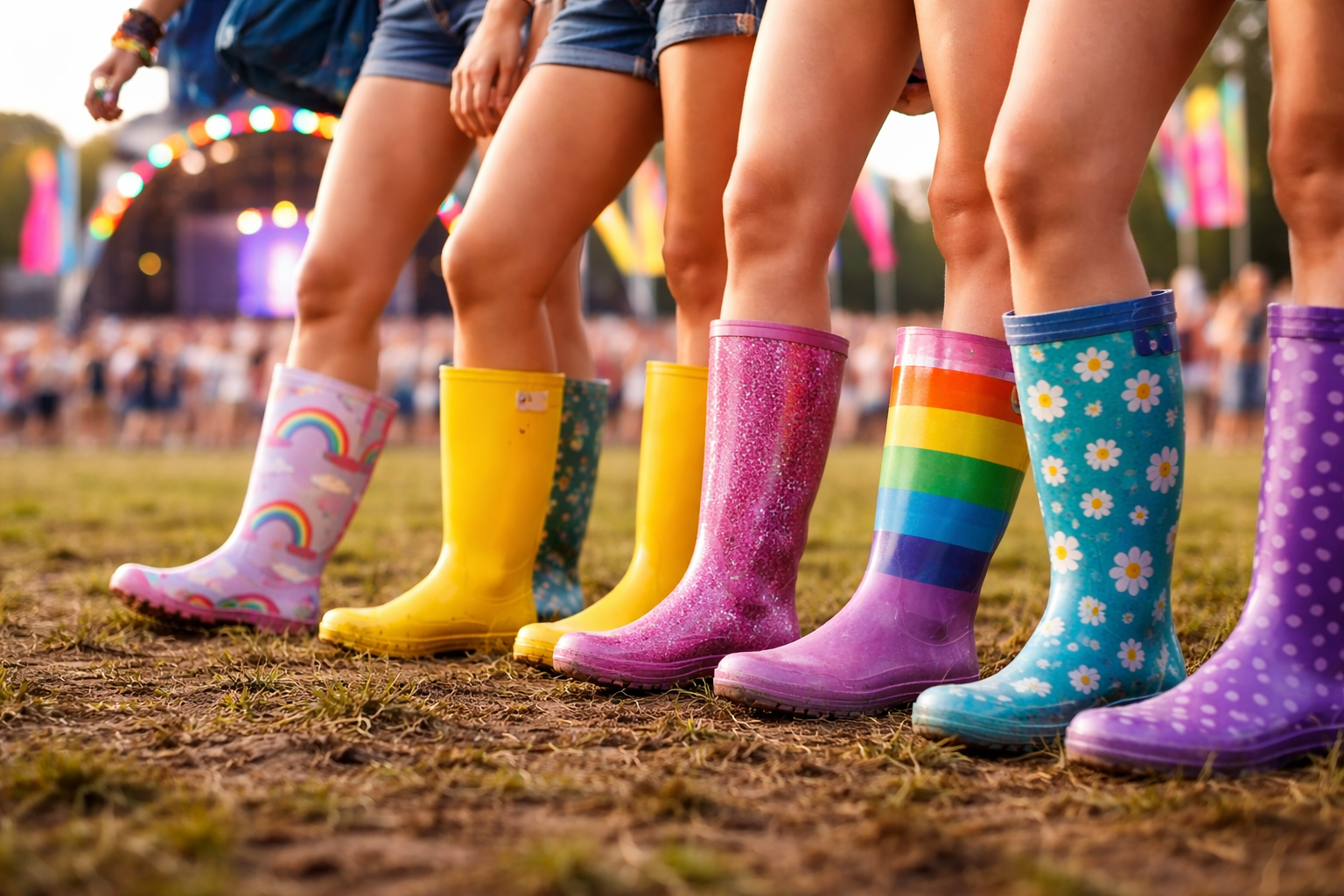
Wellies vs Walking Boots for UK Festivals: What Should You Actually Wear?
If you want the short version, walking boots are usually the better choice for most UK festivals because they are more comfortable, more supportive, and easier to wear all day. Wellies still matter when the site turns into a proper mud bath. If you have room to bring both, that is the smartest move. If you only want one pair, walking boots are usually the safer bet unless the forecast looks grim.
This is one of the most useful festival buying decisions to get right because your feet do a ridiculous amount of work over a weekend. You are not just standing at a stage. You are walking from car parks, queuing, trekking back to camp, cutting across fields, dancing, standing around, and dealing with whatever British weather decides to throw at you. The wrong footwear can turn the whole weekend into a blistered slog.
This guide is written for real UK festivals, not fantasy sunshine weekends. Alan has done 6 Download Festivals, 2 Sonisphere Festivals, plenty of day events and full camping weekends, so this is built around the reality of mud, long distances, campsite chaos and tired legs — not just what looks good in a product listing.
If you are still building the rest of your kit, start with Festival Packing List UK. If you are sorting your full camping setup, also see Best Festival Tents UK and Best Earplugs for Concerts and Festivals UK.
Quick answer: should you wear wellies or walking boots to a festival?
For most UK festivals, walking boots are the better all-round choice. They give you more support, better comfort over distance, and usually fewer problems with rubbing and fatigue. Wellies are the better emergency option when mud gets deep, sticky or unavoidable. The best strategy is often to wear boots by default and keep wellies as backup if the forecast or site conditions look rough. If you have decided on wellies, see our guide to the best festival wellies UK for picks at every budget.
Why this decision matters more than people think
Footwear is one of those festival decisions that people often treat like an afterthought, right up until day one. Then the reality kicks in. UK festival sites are rarely small. You can end up walking much further than expected just moving between the campsite, arena, food stalls, toilets and stages. Add rain, uneven ground, loose gravel, trampled grass, churned-up mud and tired legs, and the difference between “good enough” footwear and the right footwear becomes obvious very quickly.
That is why this question deserves a proper answer instead of lazy advice. The right choice depends on:
- the weather forecast before and during the festival
- the ground conditions on site
- how far you expect to walk
- whether you are camping or day-tripping
- how much space you have for a backup pair
Wellies vs walking boots: quick comparison
| Feature | Wellies | Walking boots |
|---|---|---|
| Deep mud | Better | Can struggle if the mud gets properly deep |
| All-day comfort | Usually worse | Usually much better |
| Support | Limited | Better ankle and foot support |
| Breathability | Usually poor | Usually better |
| Blister risk | Can be high if badly fitted | Still possible, but usually lower if broken in |
| Mixed weather and long walks | Usually worse | Usually better |
| Heavy rain and churned-up fields | Often best | Can be overwhelmed in very wet conditions |
Wellies vs walking boots by conditions — at a glance
| Condition | Wellies | Walking boots | Verdict |
|---|---|---|---|
| Heavy rain / deep mud (ankle+) | ✅ Essential | ❌ Waterlogged quickly | Wellies only |
| Light rain / damp grass | ✅ Works well | ✅ Waterproof boots hold | Either — boots more comfortable |
| Dry and warm | ❌ Hot, sweaty, tiring | ✅ Far more comfortable | Boots every time |
| All-day walking (8km+) | ❌ Fatigue and blisters | ✅ Built for this | Boots every time |
| Late night, uneven ground | ✅ Protective | ✅ Better ankle stability | Either — boots more stable |
| Crowds and stages | ✅ Feet protected from being trodden on | ✅ More comfortable standing | Draw |
When walking boots are the better choice
Walking boots are usually the smarter all-round festival option, especially in typical UK “mixed but not catastrophic” conditions. If the site is damp, a bit muddy in places, or just generally uneven and messy, boots are usually better for long-distance comfort and support.
That matters because festival weekends are not just about keeping your feet dry. They are also about how your feet feel after hours of walking and standing. Walking boots tend to win because they usually offer:
- better cushioning and support over long distances
- more grip on mixed surfaces
- less leg slap and floppiness than wellies
- better breathability in warm weather
- more useful performance if conditions stay mostly dry or only lightly muddy
That is why walking boots are often the better pick for:
- Download in decent weather
- dry or mixed summer festivals
- large sites where you will walk a lot
- people who hate sore feet and blisters
- campers who want one main pair to wear all weekend
If you need options, browse walking boots for festivals on Amazon or waterproof hiking boots on Amazon.
When wellies are the better choice
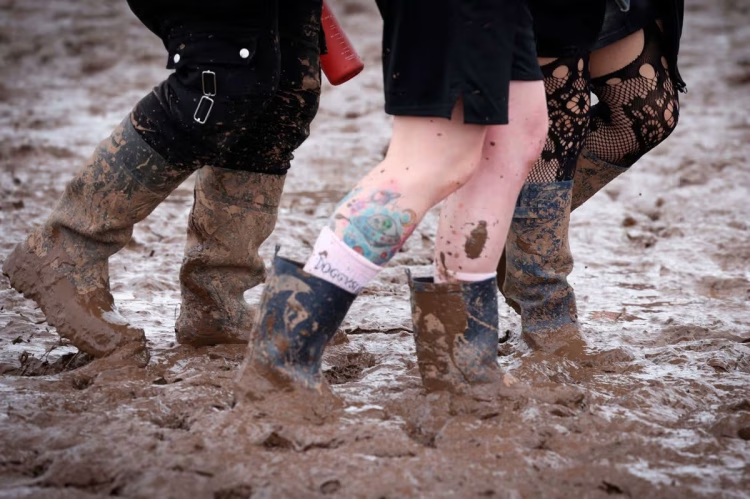
Wellies stop being a joke and start becoming essential when the site turns into a proper mud problem. Not “a few puddles near the loos.” Real mud. Sticky, deep, churned-up, soaking, boot-swallowing muck.
That is where wellies still earn their place. They are usually the right answer when:
- heavy rain has hammered the site before the festival
- the ground is already badly churned up
- mud is deeper than your boots can comfortably handle
- you know the site has a history of turning nasty in wet weather
The problem is that wellies are usually not the better choice once the mud is only light or localised. They can be sweaty, rub badly, feel clumsy on long walks, and offer much less comfort over a full day. That is why people often regret wearing them by default in conditions where walking boots would have been fine. If you do go with wellies, our guide to the best festival wellies UK covers the best options from budget to premium.
If you want options, browse festival wellies on Amazon or short wellies for festivals.
The best answer for most people: boots first, wellies as backup
If you are driving in or have room in your kit, bring both. That really is the cleanest answer.
- Walking boots: default choice for comfort, distance and mixed conditions
- Wellies: backup choice for serious mud or relentless rain
This gives you the best of both worlds. You are not forcing yourself to stomp around in wellies all weekend just because you packed for disaster, but you are also not stuck if the site turns into a swamp.
If you only have room for one, pick based on the likely conditions:
- Dry or mixed forecast: walking boots
- Heavy rain or known muddy site: wellies, or ideally both
What about trainers?
Trainers can be fine in dry conditions, especially for day events, but they are much less forgiving if the weather flips. Once wet, they usually stay wet. Once muddy, they are a mess. For full camping festivals in the UK, trainers work best as a backup or camp shoe, not your only footwear plan.
If you want an easy setup, the most practical festival footwear mix for a lot of people is:
- walking boots as the main pair
- wellies as backup if needed
- light trainers or slip-ons for around camp in good weather
Festival-by-festival footwear guide
The right footwear choice varies significantly by festival — site terrain and drainage make a bigger difference than the weather alone.
| Festival | Site type | Recommendation |
|---|---|---|
| Glastonbury | Somerset clay farmland — notorious for deep mud | Wellies essential + trainers or boots for dry days |
| Download | Donington Park — clay soil, reliable mud in rain | Wellies + boots. Alan’s 6 Download festivals: both every time |
| Reading | Richfield Avenue — muddy in sustained rain | Wellies + waterproof boots as backup |
| Leeds | Bramham Park — hillside, slippery in wet conditions | Boots with grip as priority, wellies for worst days |
| Latitude | Henham Park — generally good drainage | Waterproof boots usually sufficient, wellies optional |
| Green Man | Glanusk Park hillside — slopes get slippery in rain | Walking boots with proper grip recommended |
| End of the Road | Larmer Tree — relatively dry, good drainage | Trainers often fine, boots as backup |
| Sonisphere / similar arena sites | Variable — check site-specific reports | Boots default, wellies if rain forecast pre-event |
What should first-timers do?
If this is your first UK camping festival and you are overthinking it, keep it simple:
- Check the forecast a few days before you leave
- Check the site and community chatter if you can
- If in doubt, wear walking boots and pack wellies as backup
- Pack good socks either way
The biggest rookie mistake is treating wellies as the automatic festival footwear choice no matter what. They are not. They are the mud solution, not always the best footwear solution.
How socks change the whole decision
Good socks matter more than most people think. Thick, comfortable socks can make boots better and wellies more bearable. Cheap socks, sweaty socks, or socks that rub badly can ruin either option.
At minimum, pack:
- one pair of decent socks for each day
- one or two spare dry pairs
- longer socks if you are wearing wellies
This is one of those low-cost upgrades that pays off much more than some flashy campsite gadget. If you need extras, browse hiking socks on Amazon.
Welly socks — the upgrade most people skip
If you are wearing wellies, the single most impactful upgrade is what goes inside them. Thin cotton socks inside rubber wellies are the primary cause of festival welly blisters — they provide no cushioning, retain moisture against your skin, and allow the rubber to contact your heel with every step.
What to use instead:
- Dedicated welly socks — longer, cushioned, designed for the specific friction points inside a welly (heel, inner calf). Browse cushioned welly socks on Amazon
- Thick hiking socks — a good pair of hiking socks worn inside wellies provides cushioning and wicks moisture effectively. Browse thick hiking socks on Amazon
- Merino wool socks — naturally odour-resistant, temperature-regulating, and comfortable for all-day wear. The best all-round option if you are wearing wellies for extended periods
The blister prevention routine for wellies: apply Body Glide or anti-friction balm to your heel and ankle before putting on socks each morning. Or use zinc oxide tape directly on the skin at known hot spots. Both approaches significantly reduce the friction that causes blisters. When a hot spot develops regardless, act immediately with a Compeed hydrocolloid plaster — do not wait until it is a full blister.
Pack one pair of welly socks per day and one spare. See our full guide on how to stop wellies rubbing at a festival for the complete prevention and treatment protocol.
What I would choose in different scenarios
If the forecast looks mostly dry
Walking boots every time. Better support, more comfort, easier to wear all day.
If rain is likely but not catastrophic
Still walking boots for most people, especially waterproof ones. Pack wellies only if you have room and want a backup plan.
If the site is already waterlogged or known for deep mud
Bring wellies, and if possible bring boots too. In a true mud bath, wellies stop being optional. See our best festival wellies UK guide for the right pair.
If you are doing a day festival rather than camping
Walking boots or sturdy waterproof shoes usually make more sense than full wellies unless conditions are especially grim.
Common festival footwear mistakes
- Wearing new boots without breaking them in
- Assuming wellies are always the “festival shoe” by default
- Ignoring how much walking you will do
- Not packing spare socks
- Trusting trainers in wet conditions
- Bringing only one option when you had room for two
Quick buying guide
| If you want… | Buy… | Amazon route |
|---|---|---|
| Best all-round festival footwear | Walking boots | Walking boots on Amazon |
| Serious mud protection | Wellies | Festival wellies on Amazon |
| Better comfort plus backup | Boots + wellies | Waterproof boots + short wellies |
| Cheaper comfort upgrade | Better socks first | Hiking socks on Amazon |
| Welly blister prevention | Cushioned welly socks + anti-friction balm | Welly socks + Body Glide |

Final verdict
If you only want one simple answer, it is this: walking boots are usually better for most UK festivals, and wellies are best when things get properly muddy.
So the smartest approach is:
- wear boots by default
- pack wellies if you can — see our best festival wellies UK guide for the right pair
- watch the forecast
- do not underestimate socks
If you get that right, your whole weekend gets easier.
And if you are still sorting the rest of your gear, go back to Festival Packing List UK so your footwear choice fits the rest of your kit.
Frequently asked questions
Are wellies or walking boots better for festivals?
Walking boots are usually better for comfort, support and long distances. Wellies become the better option when mud gets deep and unavoidable.
Should I take both boots and wellies to a festival?
Yes, if you have room. That is usually the smartest setup because boots are better in most conditions and wellies cover you if the site turns into a mud bath.
Are trainers okay for festivals?
They can be fine in dry conditions, especially for day events, but they are much less reliable in wet weather and are not the best single-footwear choice for UK camping festivals.
Do wellies cause blisters at festivals?
They can, especially if they do not fit well or you are wearing them for long distances in warm conditions. Use thick cushioned welly socks, apply anti-friction balm to the heel and ankle each morning, and treat any hot spot immediately with a Compeed plaster. See our how to stop wellies rubbing guide for the full protocol.
What is the best festival footwear in the UK?
For most people, waterproof or water-resistant walking boots are the best all-round choice. Wellies are the better backup for heavy mud.
What socks should I wear with wellies at a festival?
Dedicated cushioned welly socks or thick hiking socks — not thin cotton. Thin socks are the primary cause of welly blisters. One pair per day minimum, plus a spare.
Related reading
Discover more from The Mosh Manual
Subscribe to get the latest posts sent to your email.
5 thoughts on “Wellies vs Walking Boots for Festivals: Which Is Better in the UK?”